- NC EP HCC Newsletter
- Posts
- It's getting hot in here!
It's getting hot in here!

Nevada County EP HCC
June 01, 2025
Nevada County Emergency Preparedness
May 2025 | Issue #2

 Bourn Cottage, Empire Mine | What's Inside? |
News from the Public Health Emergency Preparedness (PHEP) Program
I’m guessing like us, you’re wondering…how are we sliding into June, already?? Time is flying and no one is feeling that more than our lovely PHEP Coordinator, Kim Stine. She is officially on baby watch and has left us to enjoy her last few weeks of pregnancy. We are already missing her around the office - but are sending good vibes her way, for a peaceful delivery and a healthy baby!
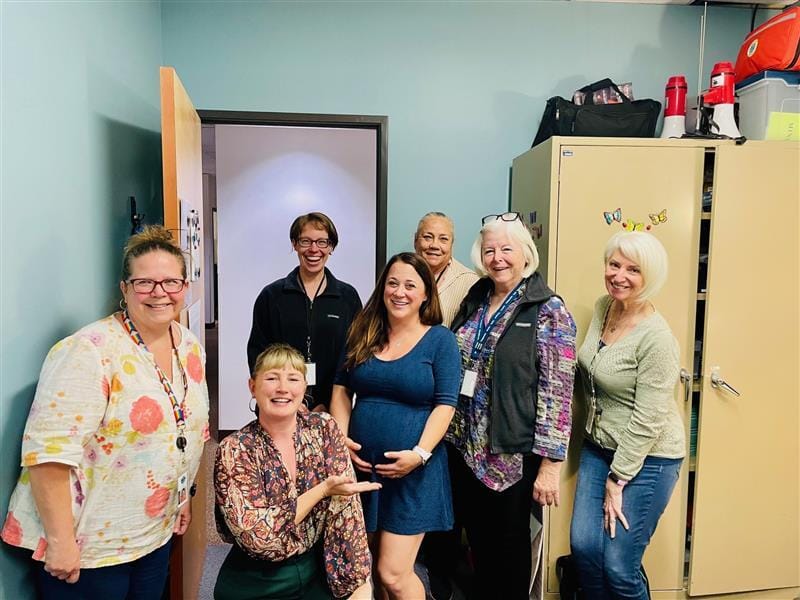
Members of our DOC team - showing off Kim and the growing baby Stine!
Contacting the PHEP team
As a reminder, if you need to contact the PHEP team, please remember to use our HCC email - [email protected] and the HCC Coordinator’s phone number - (530) 470-2741.
For urgent matters, or event/drill updates - please text both Brett Fletcher (Program Analyst) and Tara Crim (HCC Coordinator). Kim will not be taking calls until the end of this year… and we’d hate to miss an important call or needed update!
Equity in Emergency Preparedness
As mentioned in last month’s newsletter, Brett recently attended the “Preparedness Summit” in San Antonio, sponsored by NACCHO (National Association of County and City Health Officials). One great takeaway that Brett shared with the PHEP team was the focus on equity in emergency planning.
We know that disasters pose unique challenges in areas like our rural Nevada County. Those challenges can be hard on individuals and communities, particularly those facing health inequities. Because of these challenges, and the effects they have on our county, we understand that incorporating health equity principles into disaster planning and recovery efforts is essential to ensuring a more effective response.
During Brett’s conference, he attended a session that focused on a document, titled “Integrating Health Equity into Disaster Recovery Plans”. This guide was designed for the Kansas Department of Health and Environment - and they are gracious enough to share it with others. This document should be used as a starting point when determining how to embed healthy equity into your emergency planning, although it most certainly can be used for other programs. If you have already incorporated equity into your work, or are in the process, please feel free to use this guide as a reference for how to start this important work.

We are using this guide as a supplement to our in-house equity planning support. The PHEP team is fortunate enough to have a designated Health Equity Coordinator, Elias Ortiz, who works with each of the programs here at Nevada County Public Health (NCPH) to incorporate equity into the work we do. Do you have a dedicated equity program at your organization? If so, we’d love to hear about it!
Coalition News
Radio Check
Thanks to those of you who participated in our radio drill on May 7th. We’re happy to share that we had 100% participation. We appreciate that every organization (that holds a coalition radio) prioritized this test.
As we continue to build on the current radio reach, and begin to include partners in Eastern Nevada County, we are exploring where we have dead spots and how to overcome those obstacles. During the drill, we decided to test how far up Highway 20 we could get a clear signal, just using the handheld radio. Tara, our HCC Coordinator, made it pretty far up Highway 20, almost to the turn for Washington before the signal was lost.
We know that having a clear signal to Tahoe Forest Hospital District (TFHD) and surrounding areas is key to our emergency response efforts. In an effort to bridge the emergency community gap between Western and Eastern Nevada County, TFH has increased their radio knowledge within their Emergency Managment Team. Read more under “Partner Spotlight” on how Anthony Levin, Environment of Care Assistant, for TFHD is increasing his skillset to serve Eastern County better in an emergency event.
Summer, summer, summertime!
Do you have summer fever, yet? Although the calendar says we’re still in spring, the heat is starting to tell us otherwise! I know we all have a love-hate relationship with summer: the beautiful warm days it brings, the BBQs and time with family vs the ever-increasing extreme heat, wildfire potential and power outages. You know what makes the “bad parts” of summer more manageable? Being PREPARED!
You all know better than anyone what an impact our preparedness plans make on the community, during an emergency event. There are several tools out there that our specific for Nevada County - which ones are you using?
Let’s talk about CODE RED alerts. We have encouraged many of you to utilize CODE RED - and to spread the word to your team that CODE RED alerts can be used for both work, home and schools. The PHEP team likes to put in both our home and work addresses, in order to receive notifications for critical situations in both locations. This is especially important if you don’t live in Nevada County.
The easiest way to add additional addresses is on the actual website, as opposed to the app.

We’d also encourage all partners and their teams to sign up for WATCH DUTY alerts. Watch Duty alerts notify you when there is a fire in your assigned area (you pick your areas when you sign up. This is helpful if or when you smell smoke and want to check if there is a fire nearby. This platform also informs you of prescribed burns in your area. For more information, please visit: Watch Duty - Wildfire Maps & Alerts
Speaking of fires - the Office of Emergency Services (OES) for Nevada County has set up evacuation zones to aid the community in evacuations during emergencies.
What are zones? In the event of a wildfire or an emergency situation, law enforcement and fire agencies issue evacuation warnings or evacuation orders for impacted areas. These notices are issued for a Zone with an evacuation Status. Authorities will use Zone Names in emergency alerts, media releases, and on social media to notify residents which areas are under an evacuation warning or order. Follow easy steps to find and remember your zone here → Ready Nevada County | Nevada County, CA.
Having several methods to stay informed during fire season or for any emergency event is smart and a great way to be prepared!
CODE RED: Community Notification Enrollment
WATCH DUTY: Watch Duty - Wildfire Maps & Alerts
KNOW YOUR ZONE: Know Your Zone
Health Officer’s Corner - with Dr. Sherilynn Cooke

Bordetella pertussis, photo credit: CDC, Dan Higgins
Pertussis (Whooping Cough)
Have you heard of Pertussis (also known as whooping cough)? Pertussis is caused by the bacteria Bortadella pertussis, is highly contagious and is spread by coughing. Transmission typically occurs when a susceptible person inhales aerosolized droplets from the respiratory tract of an infected person. People with pertussis have severe coughing attacks that can last for months. Anyone can get Pertussis, although infants too young for vaccination are at the greatest risk for life-threatening cases.
Since the beginning of 2025, eight confirmed cases of pertussis have been reported to Nevada County Public Health (NCPH). In May there have been 3 confirmed cases and one probable case.
At first, whooping cough may seem like a common cold, but it gets worse fast.
Early symptoms usually include:
Runny or stuffed-up nose
Low-grade fever (less than 100.4°F) or no fever
Mild cough
After 1–2 weeks, people may have coughing fits that can last up to 10 weeks. Babies may have pauses in breathing or struggle to breathe. Although vaccinated people can still get Pertussis, they may not get as sick.
Pertussis is largely preventable with the appropriate vaccines, Tdap or DTaP.

Vaccination
Newborns are at highest risk for complications. Getting Tdap during pregnancy is the only way to protect your baby before birth. When given during pregnancy, Tdap is approximately 90% effective in preventing infant hospitalizations.
Pregnant people should receive Tdap vaccine (whooping cough booster) at the earliest opportunity in their 3rd trimester (between 27–36 weeks) of every pregnancy. Vaccination during pregnancy helps pass on protective antibodies to the baby before birth.
Babies and children should receive a dose of DTaP (whooping cough vaccines) at 2, 4, 6, and 15 months as well as 4–6 years of age. Children need a total of 5 doses to be protected from severe pertussis.
Preteens and teens ages 11 years and older should receive a dose of Tdap to boost immunity which wanes after several year.
Adults should receive at least one dose of Tdap
For more information on your vaccination status or to get the appropriate Pertussis vaccine for you or your family, reach out to your primary care provider.
Partner Spotlight
Another month, another amazing partner to feature!
The team over at Tahoe Forest Health District (TFHD) has been busy running drills and preparing for emergency communications during the past few months!
Earthquake Drill
Because of their close vicinity to the State of Nevada, TFHD is able to collaborate with Nevada partners to prepare for widespread disasters.
Anthony Levin, Environment of Care Assistant at TFHD, tells us that their emergency management team was able to collaborate with Northern Nevada Public Health (NNPH) recently, through TFHD’s partnership with Washoe County’s Inter-Hospital Coordination Council (IHCC) to conduct two regional earthquake exercises.
These exercises occurred on May 14th and 20th - and were conducted on two separate days to allow for more regional partners participation. Day one focused on Tahoe Forest Hospital and the second day focused on Incline Village Community Hospital. This allowed the TFHD team to focus on the Emergency Operations Plan (EOP) of each facility, instead of orchestrating events at both facilities at once.

The exercise simulated a Mw 6.9 (MMS - moment magnitude scale) earthquake originating from the Mt. Rose Fault in Washoe Valley, Nevada. While the exercise in Washoe County took place 24 hours after the initial earthquake, the TFHD team opted to exercise at the moment of disaster to ensure the EOPs were strong enough to continue operations beyond 24 hours.
Anthony said these drills “provided tremendous insight into the operability of the plans as they pertain to each facility”. He went on to share that gaps were noted for improvement - while their facilities team proved invaluable in providing damage assessment reports. They were able to contact their emergency supply vendors for viability and gained valuable information on vendor capabilities during an emergency event.
TFHD added that “We are grateful to have such strong cross-state support and inclusivity from our partners in Washoe County! We would be happy to share our After-Action Reports (AAR) with any of our Nevada County EP HCC partners.”
HAM… radio!
In an effort to beef up the viability of their communication efforts, TFHD has been concentrating on radio processes and getting in-house support for those processes.
Tahoe Forest Hospital and Incline Village Community Hospital both have HAM radios that were set up by Amateur Radio Emergency Services (ARES) members Arlan Robinson (KA7ZAU) and Rick Sweeny (K9THO) in conjunction with TFHD IT, Facilities, and Emergency Management teams. Although they had the radios and antennae, their system was not operational for quite some time. Once operational, their health system did not have any licensed operators, so they relied on ARES to test their radios and operate them in an emergency.
Anthony Levin to the rescue! Anthony stepped up and volunteered to train to be a licensed operator for the Tahoe Forest Health System. Anthony tells us that he had been in contact with Bob Miller (WA6MTY/SK) through Washoe County’s IHCC, the county’s Hospital Coalition (TFHD is a member). Anthony says he was provided the training manual and participated “HAM Cram” classes where test material would be reviewed immediately before taking the test. After finishing the classes and registering to take the exam to obtain his HAM Radio License, Anthony was ready to become an operator!

Anthony Levin, Environment of Care Assistant at Tahoe Forest Hospital District
Anthony is proud to share that, after a few hiccups, he passed his radio exam, officially received his call sign, KO6IFC, and gained his technician class license. He tells us he’s looking forward to obtaining two additional radio licensures in the future!
A big thank you to Anthony for sharing all the details of these great activities!
If you’re interested in learning more about the process of obtaining your HAM radio operator’s license or just want to learn more about Anthony’s experience with the process, please reach out to him ([email protected]) - he’s a wealth of knowledge!
 Email us with your story or your nomination of a partner organization - [email protected] |
|
Future Happenings
EP HCC - Cybersecurity Virtual Tabletop Exercise: June/July 2025 (more details coming soon!)
Health, Safety and Fire Preparedness Carnival: June 7th, 11 - 4 pm at the Rood Center (more information) - Hosted by Gold Country Kiwanis, Nevada County OES and the Fire Safe Council
Do you have a preparedness event that you’d like to share with the coalition? Just send us a quick email and we’ll share it in our next newsletter: [email protected]